Enterprise AI Transformation
From experimentation to production-scale deployment
The Adoption Acceleration
Enterprise AI has crossed the chasm. What was experimental in 2023 is now operational in 2025.
| Year | Any AI Use | Generative AI |
|---|---|---|
| 2023 | 55% | 33% |
| 2024 | 72% | 65% |
| 2025 | 78% | 71% |
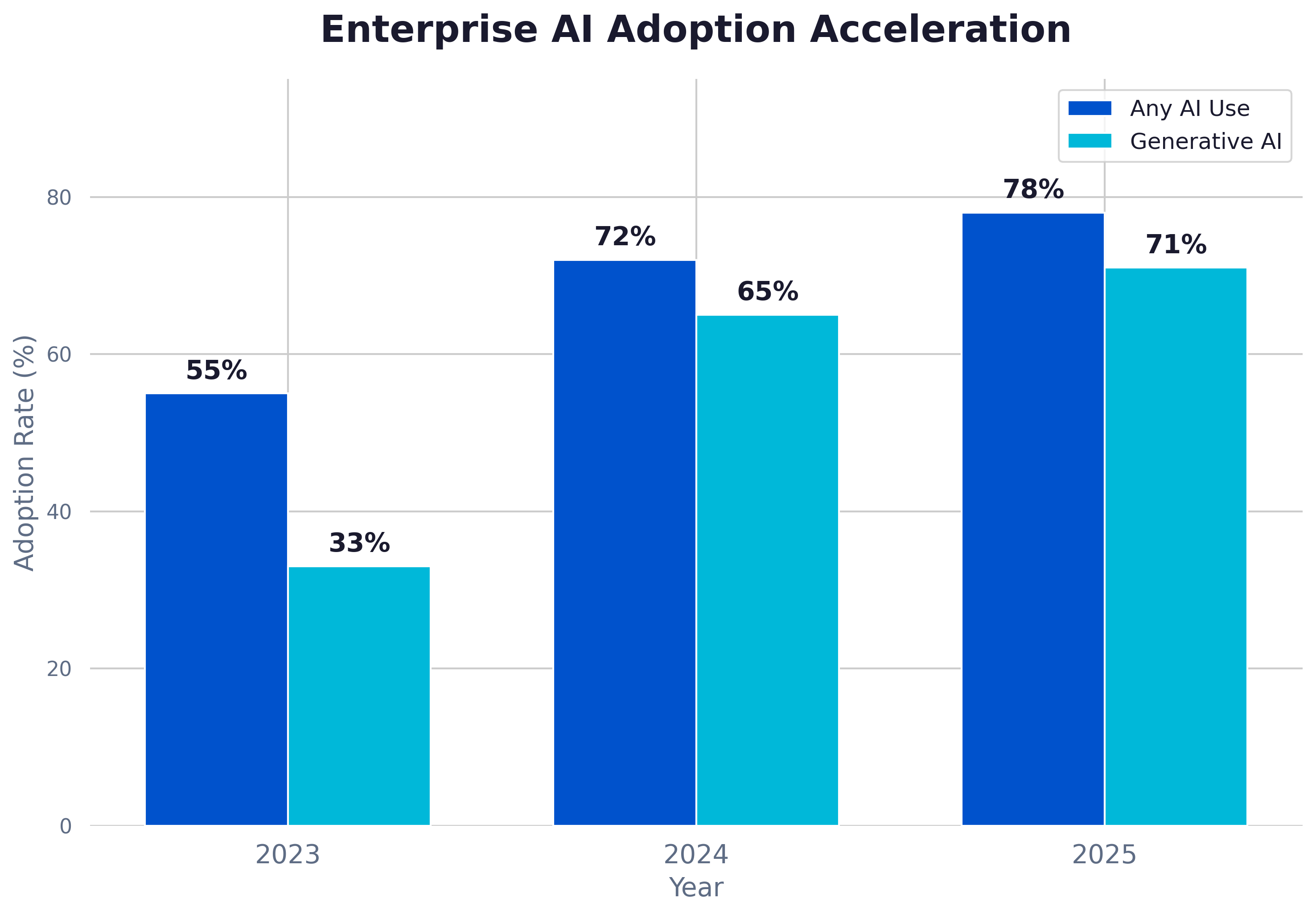
The jump from 55% to 78% in just two years represents the fastest enterprise technology adoption in modern history—faster than cloud computing, mobile, or even the internet.
Spending Trajectory
Enterprise GenAI spending tells an even more dramatic story:
| Year | Spending |
|---|---|
| 2023 | $1.7B |
| 2024 | $13.8B |
| 2025 | $37B |
| 2026 (Projected) | $52.2B |
| 2027 (Projected) | $93.9B |
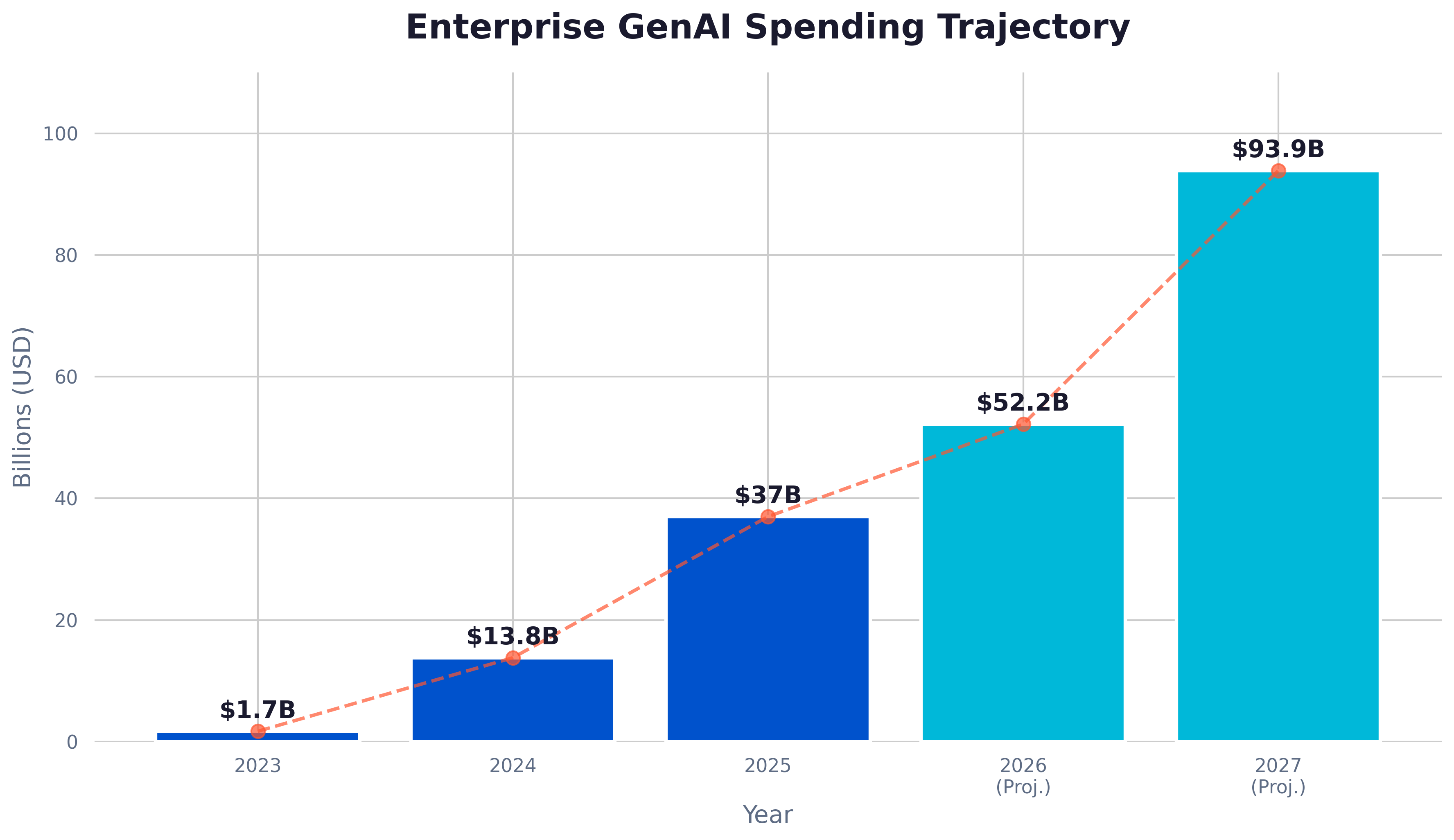
From $1.7 billion to $37 billion in two years—a 21x increase. Projections suggest this will reach nearly $100 billion by 2027.
AI Implementation by Department
AI adoption varies significantly across organizational functions:
| Department | Adoption Rate |
|---|---|
| IT | 36% |
| Marketing | 28% |
| Operations | 23% |
| Sales | 18% |
| Customer Service | 15% |
| R&D | 13% |
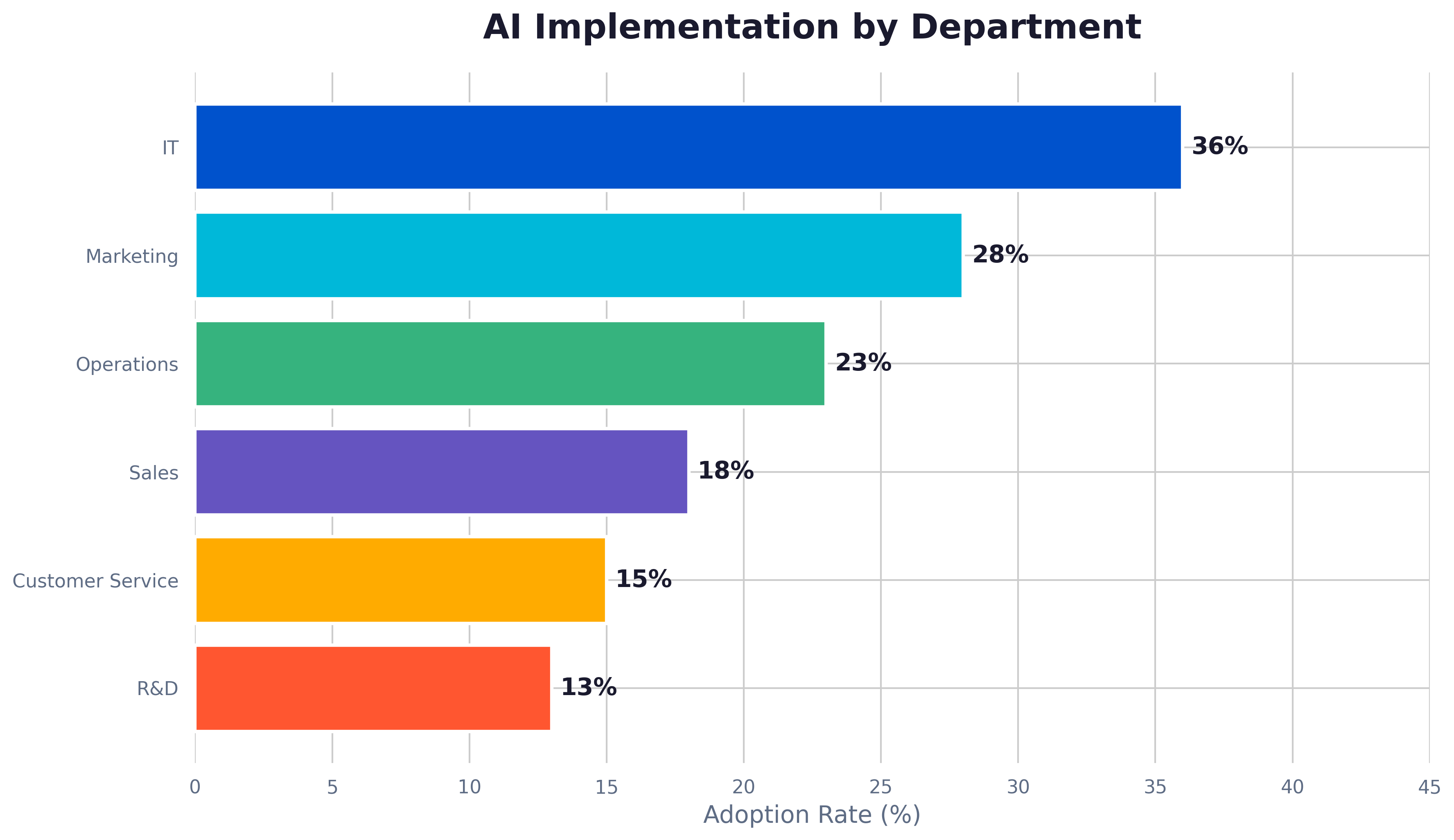
IT leads adoption—unsurprisingly, as technical teams are best positioned to evaluate and deploy AI tools. Marketing follows closely, driven by content generation and personalization use cases.
The opportunity: Sales, Customer Service, and R&D remain under-penetrated. These departments represent significant automation potential that many organizations haven't yet captured.
The Buy vs. Build Shift
Perhaps the most significant strategic shift in 2025 is the reversal of the build vs. buy equation.
2024: 47% of enterprise AI solutions built internally
2025: Only 24% built internally—76% are now purchased
This dramatic flip reflects three realities:
Commercial AI products have matured — Off-the-shelf solutions now match or exceed internal capabilities
Build costs have exploded — Recruiting AI talent, managing infrastructure, and maintaining models is expensive
Speed matters — Purchasing gets you to production in weeks, not years
Key Insight: The era of "we'll build our own AI" is largely over for most enterprises. The competitive advantage has shifted from building AI to deploying and integrating AI effectively.
What Separates Leaders from Laggards
Research from McKinsey and Deloitte identifies clear patterns separating AI leaders:
Leaders:
Deploy AI in production (not just pilots)
Integrate AI into core workflows
Measure ROI rigorously
Invest in change management
Have executive sponsorship
Laggards:
Stuck in perpetual pilot mode
AI remains siloed in IT
No clear ROI metrics
Underinvest in training
Lack C-suite commitment
The gap is widening. Organizations that haven't operationalized AI by end of 2025 risk falling permanently behind.