Infrastructure for AI/ML
The biggest challenge an organization faces while adopting Machine Learning is the infrastructure cost. As we have seen, we need a significant amount of data and high-powered processing systems for Machine Learning and self hosted AI applications. The ideal solution for this is the Cloud Environment. Investing money in dedicated hardware, infrastructure and skilled personnel is not an option that most organizations have.
Gordon Moore, the founder of Intel, made a famous prediction in 1965, which is known as Moore’s Law. He stated that:
‘The complexity for minimum component costs has increased at a rate of roughly a factor of two per year. Certainly, over the short term, this rate can be expected to continue, if not to increase. Over the longer term, the rate of increase is a bit more uncertain, although there is no reason to believe it will not remain nearly constant for at least 10 years.’
The essence of Moore’s Law is that with each passing year, the cost of computing power should halve. But, the actual drop in computing costs has actually been much more severe. Take a look at the chart below.
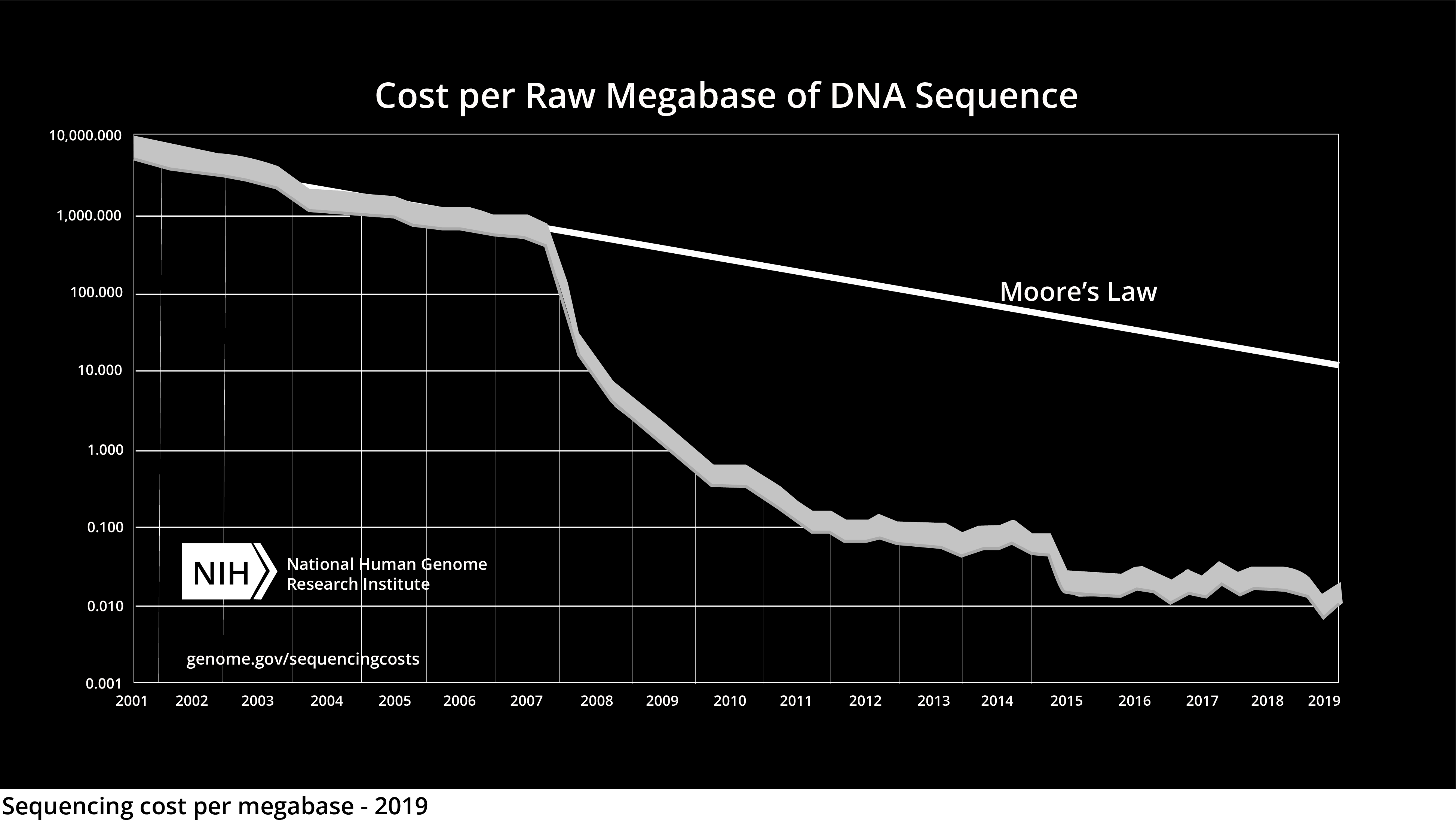
Computing costs are falling faster than what even Moore's Law could predict
It is this dramatic decrease in costs at scale that has taken Machine Learning and AI from the statistical and mathematical halls of Universities and the domain of ultra-large corporations and made it available to the average corporation and committed entrepreneurs.
The decrease in computing costs has also come at a time when growth in data has exploded.
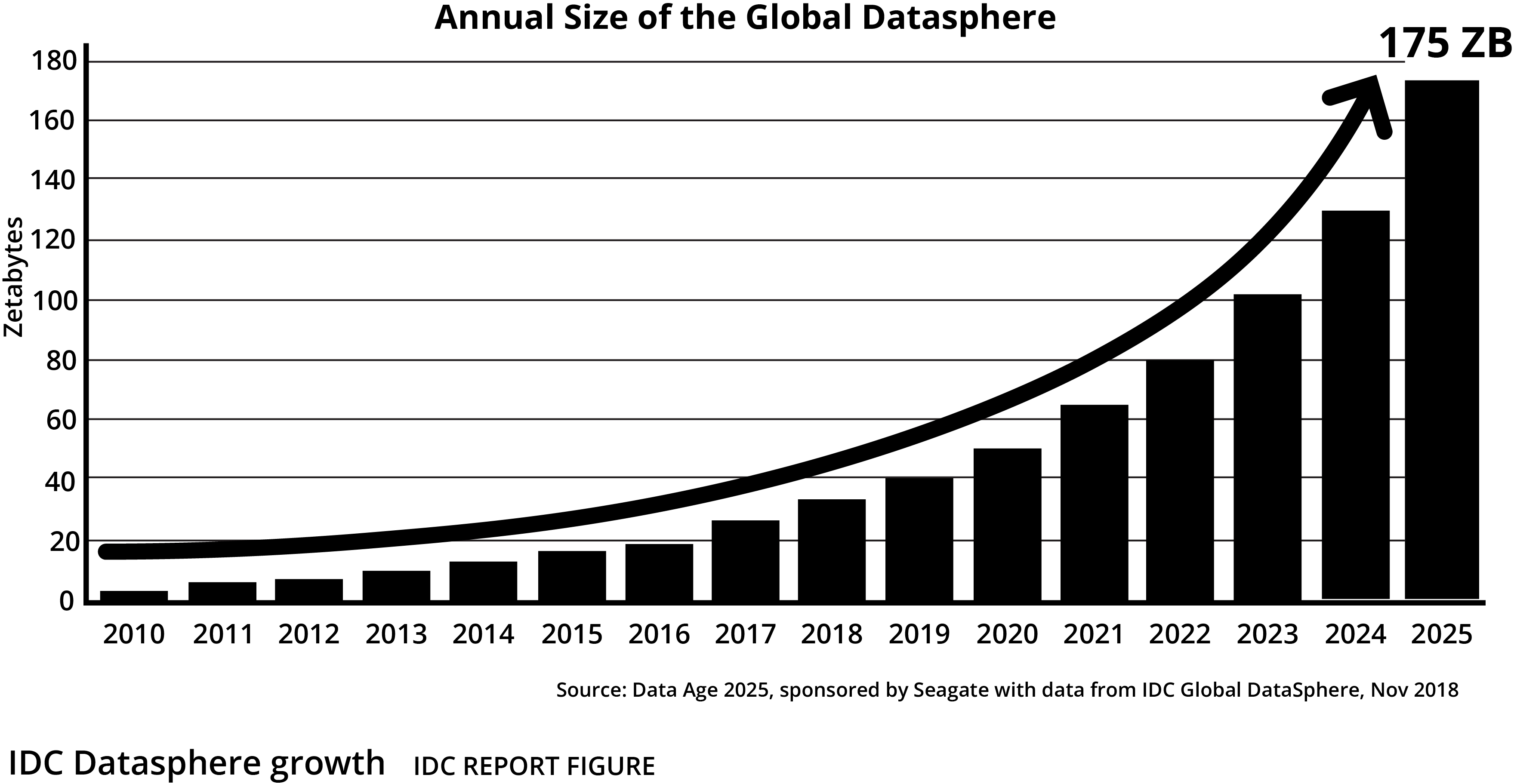
This alignment of the stars could not have been planned. These two trends are what make us believe that we are living in very interesting times.
When you hear of digital identities being given in China, tech giants getting into healthcare, and self-driving cars being around the corner, it is the abundance of computing power and the ability to handle the massive amounts of data that are to be thanked for.
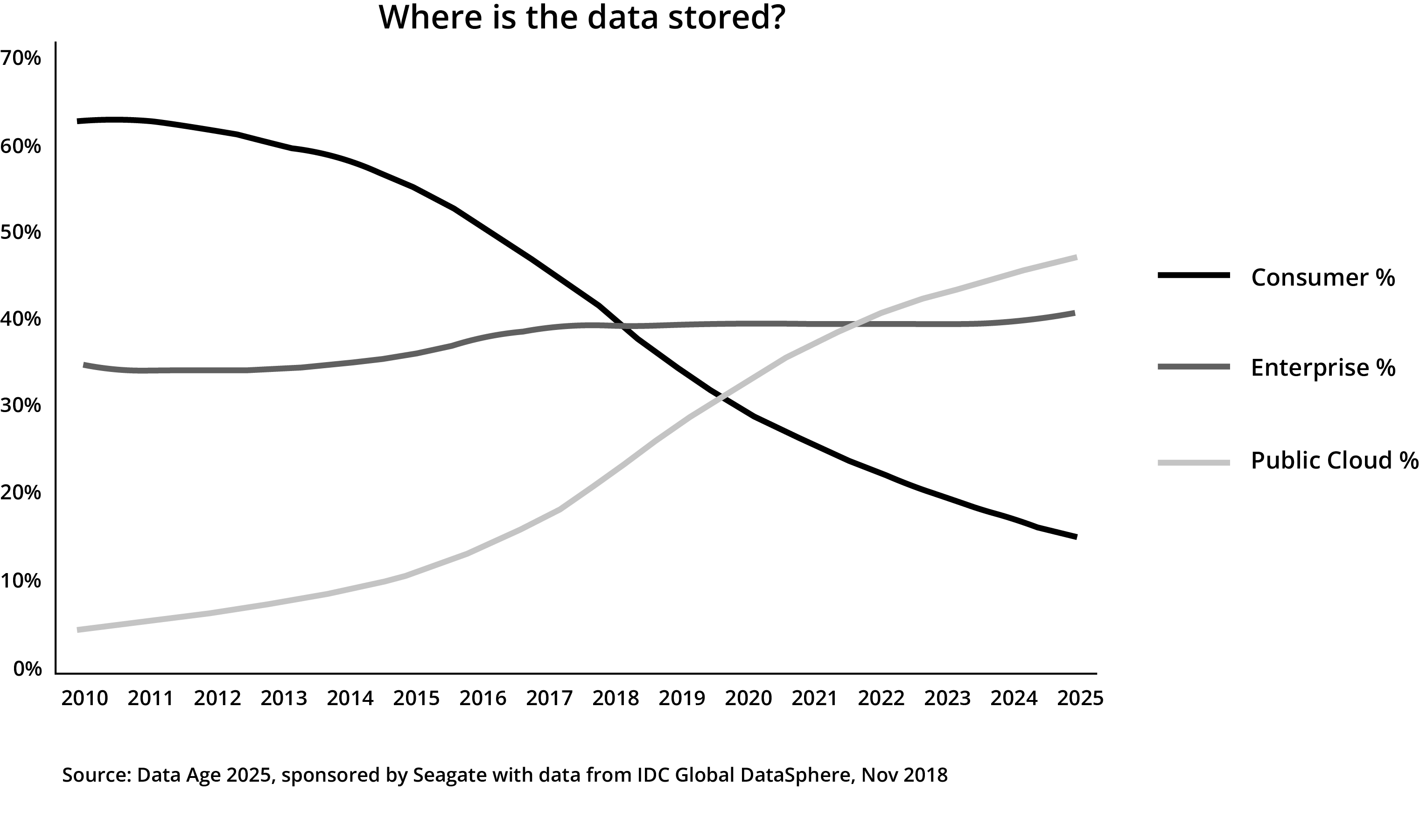
Growth of storage in the Public Cloud
Machine learning and cloud computing together form the Intelligent Cloud. Instead of maintaining your own IT infrastructure, you can use cloud computing to provide you with storage and processing power. This, combined with the machine learning capabilities, will allow intelligent clouds to learn from the vast amounts of data and analyze the situations better.
Cloud computing is divided into three essential cloud models:
SaaS - (Software as a Service that runs in the Cloud) IaaS - (Infrastructure as a Service that runs in the Cloud) PaaS - (Platform as a Service that runs in the Cloud)
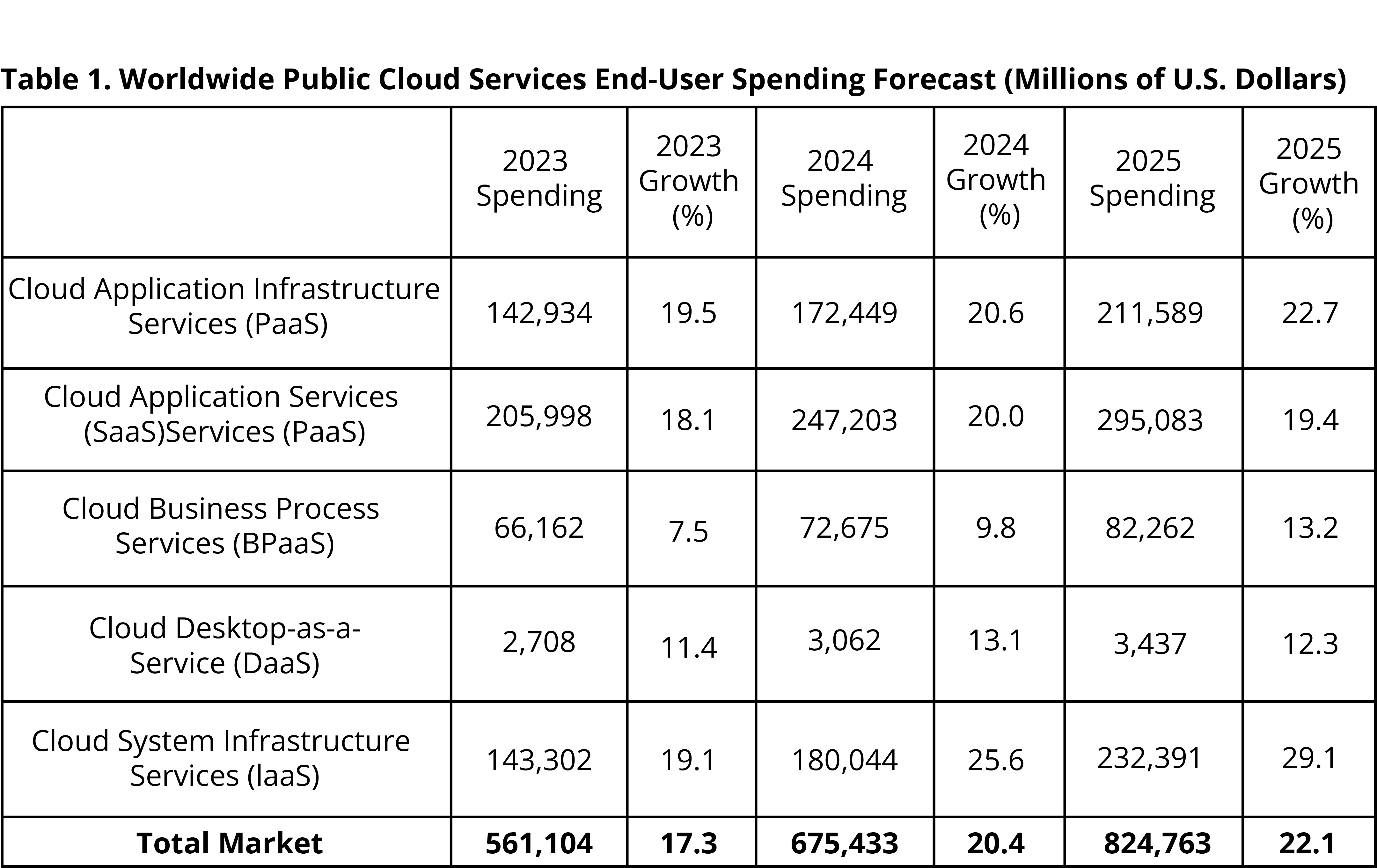
Software as a service (SaaS)
SaaS is a cloud computing model that delivers applications as it is a service managed by a third-party provider. It is one of the most dominant forms of cloud models, which made up about two-thirds of the public cloud back in 2017. The majority of these instances do not require any installations and can be run directly on the web browser. The end-user does not need to care about the operating system and the hardware.
There are many benefits of adopting the SaaS model such as being less expensive, easy to implement, high adoption rates, easy data recovery mechanisms and minimal upfront commitment required. There are a few risks such as control and security of application. So it is very important to select a trusted provider for your application
Platform as a service (PaaS)
PaaS delivers the software and development tools that are necessary to build applications. It gives them a framework which the programmers can use to create customized applications. PaaS services may include database management, operating system, and middleware.
PaaS offers an on-premise infrastructure to build and deploy your application at lower cost and in less time. But you have no control over data protection and network bandwidth which leads to adverse challenges. A few popular service providers are Google App Engine, Windows Azure and OpenShift.
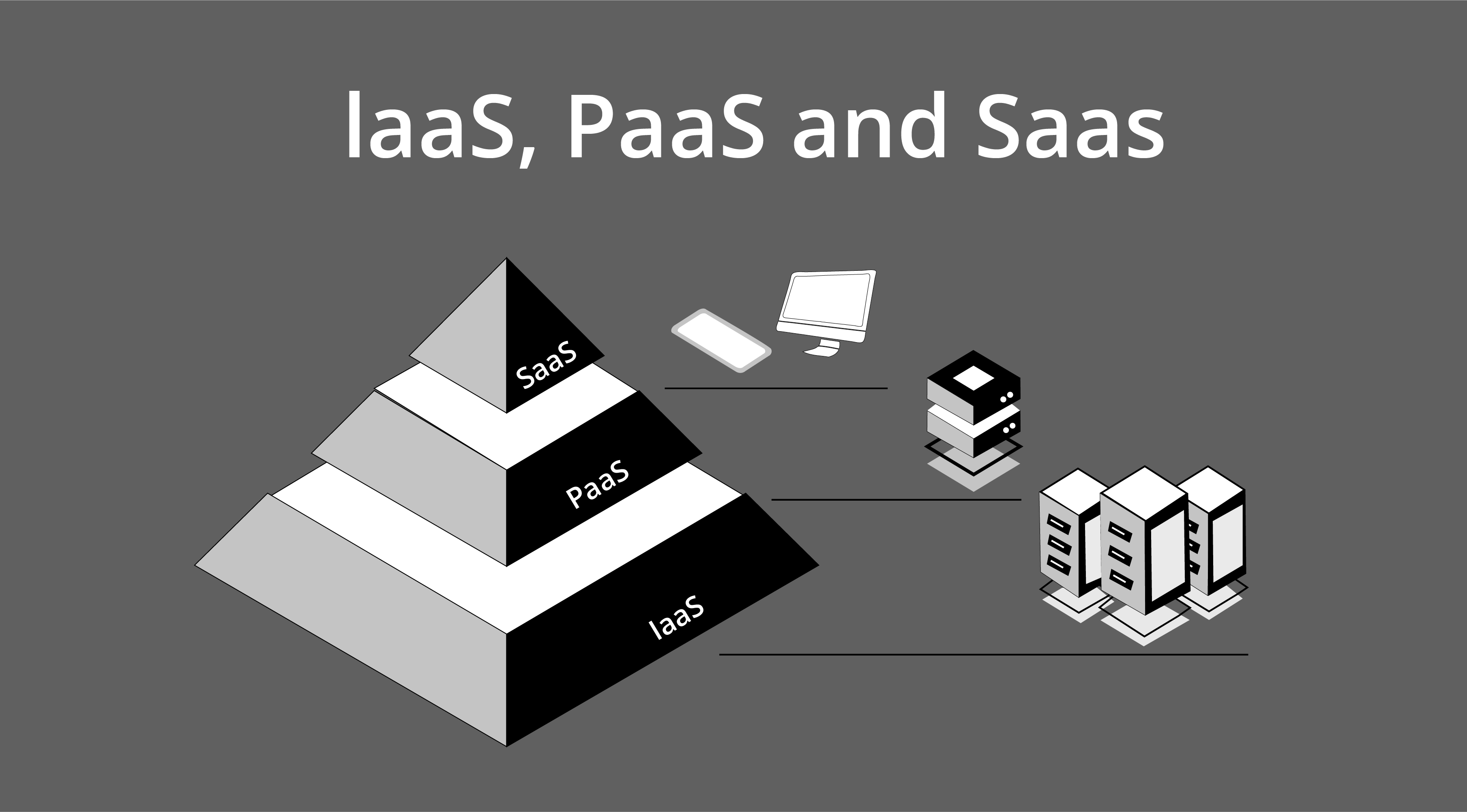
Infrastructure as a service (IaaS)
IaaS is a cloud computing model that delivers virtual computing resources like storage, networking, and virtual servers to the end-user via the internet. This is ideal for companies who want to build their applications from scratch and keep control over all the elements. Of course, you do need to have the required technical skills, but IaaS users find it easier to innovate and deploy these services, and it also cuts maintenance costs. It allows enterprises to use these resources on-demand without having to buy hardware entirely. Some of the key benefits of adopting IaaS are improved security, High Availability, Scalability, Cost saving ad Time Saving. IaaS service providers are AWS EC2, Google Compute Engine (GCE), Microsoft Azure, and VPSie.
As an organization, you need to select a cloud computing model based on your requirement, implementation and need for scalability. IaaS is commonly used due to its high-security features.
The Public & Private Cloud
Public Cloud
Public cloud is a type of computing model where users can access resources like storage, applications, and computing power via the internet. You do not need to have access to hardware as it provides unlimited scalability. It provides a multi-tenanted environment, meaning the data for various organizations may be stored on the same physical server and sharing resources. They generally have a pay-as-you-go pricing model. Examples of public cloud service providers include Microsoft Azure, Amazon Web Services, and Google Cloud.
Public cloud is best suited for:
- Storing and archiving data
- Companies with a lot of customers in IT and business infrastructure
- Providing high scalability environment for heavy workloads
- Situations when organizations need to be cost-efficient as it reduces the cost of hardware and maintenance
Limitations of public cloud
- The data is less secure on a public cloud infrastructure as it is being handled by a third-party
- The cost can exponentially rise for large enterprises as in this model you need to pay for what you use
- Some companies may have a complex architecture, but the public cloud offers a generic environment for managing business operations
Private Cloud
The private cloud also provides nearly the same benefits as the public cloud but with greater security. This infrastructure is ideal for large businesses. The data center may be physically located in the company’s premises or operated by a third-party provider. The private cloud gives you more control over the data since the infrastructure is maintained on a secured private network. Examples of private cloud service providers include Microsoft Azure, Amazon Web Services, IBM, and Cisco.
Private cloud is best suited for:
- Companies that require security and advanced privacy over their IT infrastructure like government agencies
- Organizations that need custom flexibility and scalability via “cloud bursting” i.e., non-sensitive data on public cloud and critical information on private cloud
- Large enterprises that can afford the costs of running advanced data centres
Limitations of private cloud
Private cloud is a relatively more expensive solution than the public cloud model because of hardware maintenance. Other than hardware, you also need licenses for software applications.
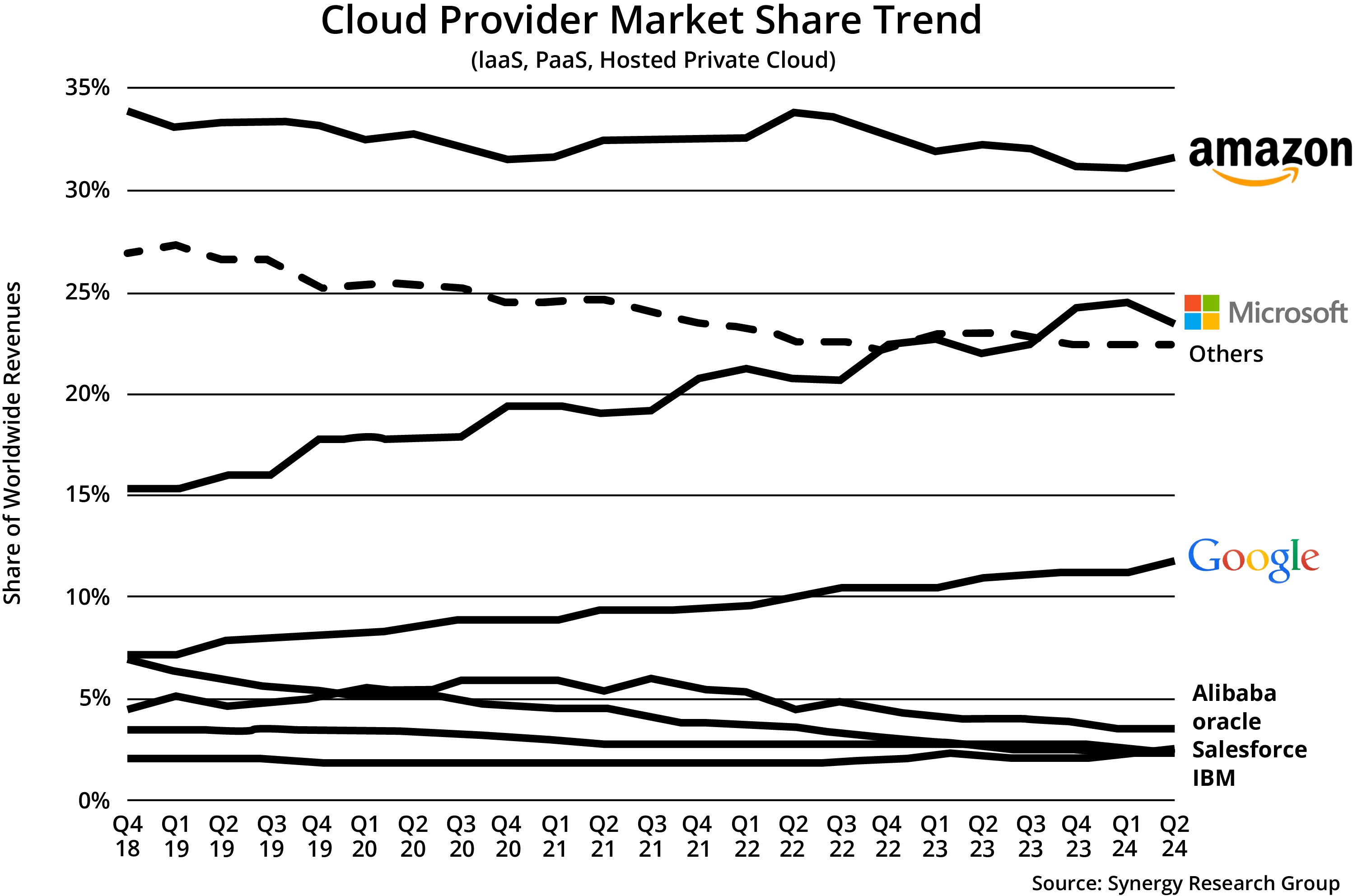
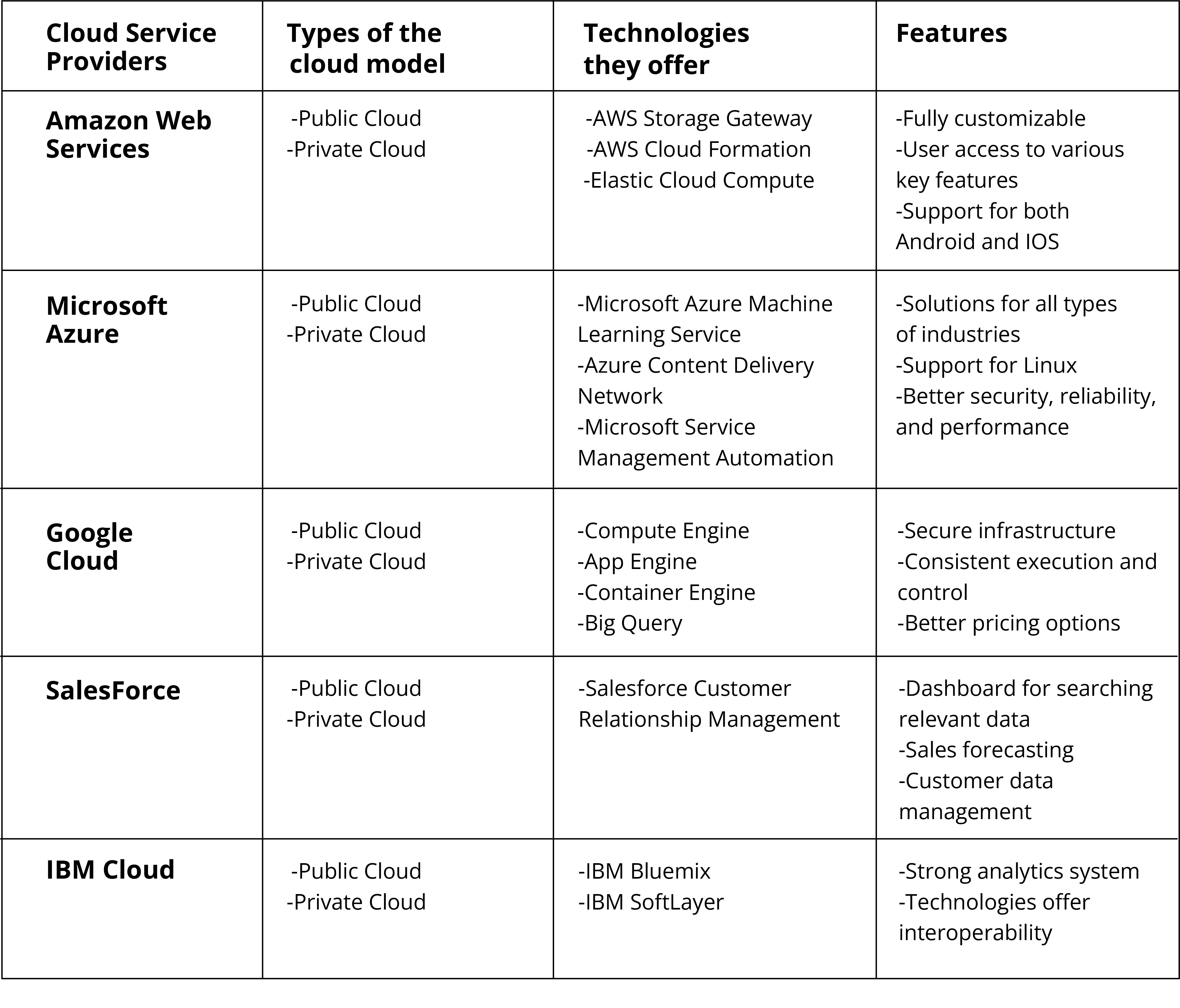
Key Cloud Service Providers